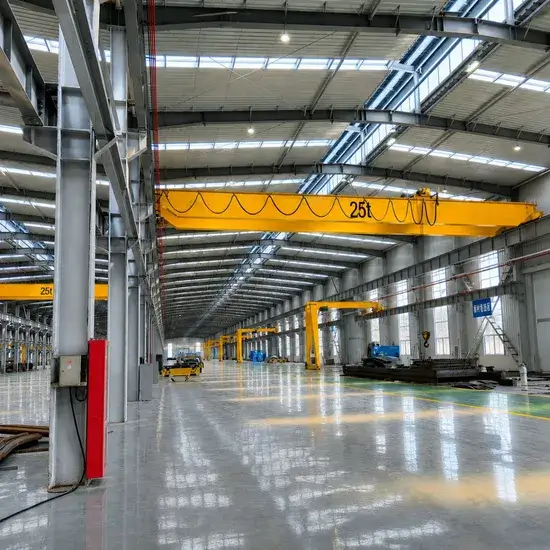
What Is Lifting Height in Overhead Crane?
(Complete Guide to Definition, Calculation & Selection for 2026 Buyers)
When choosing an overhead crane, one of the most misunderstood—but critical—parameters is lifting height. Selecting the wrong lifting height can lead to operational limitations, safety risks, and costly redesigns.
What Is Lifting Height in an Overhead Crane?
Definition:
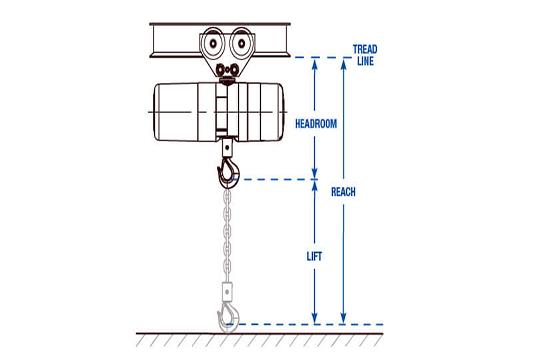
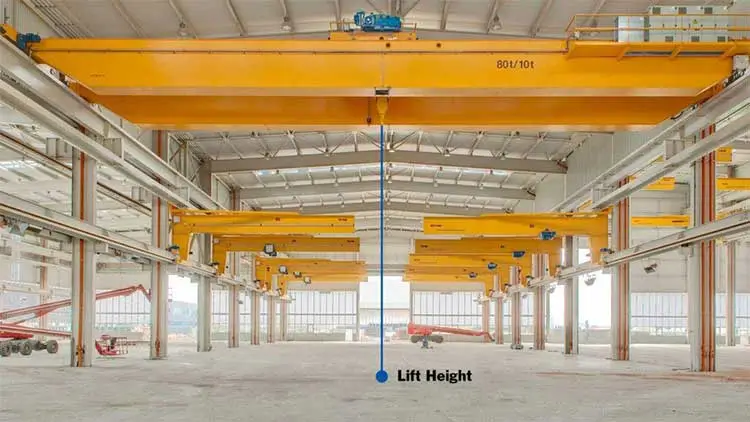
Lifting height is the vertical distance from the ground (or floor level) to the highest position the crane hook can reach.
In simple terms:
It is how high the crane can lift a load
Lifting Height vs Headroom (Important Difference)
Many buyers confuse these two.
Lifting Height
-
Distance the hook travels upward
-
Determines how high loads can be lifted
Headroom
-
Distance between crane beam and hook at highest position
-
Affects installation space
Key difference:
Lifting height = usable lifting range
Headroom = structural limitation
How to Calculate Lifting Height
Basic Formula:
Lifting Height = Building Height - Headroom Clearance - Safety Margin
Step-by-Step Calculation:
-
Measure total building height
-
Subtract crane beam and hoist space (headroom)
-
Subtract safety clearance
Result = actual lifting height
Example:
-
Building height: 10m
-
Headroom: 1.5m
-
Safety clearance: 0.5m
Lifting height = 8m
Why Lifting Height Matters
Key Impacts:
-
Determines stacking height in warehouses
-
Affects production efficiency
-
Impacts equipment installation
-
Influences crane design and cost
Insight:
Insufficient lifting height = operational bottleneck
Standard Lifting Height Ranges
| Crane Type | Typical Lifting Height |
|---|---|
| Single Girder Crane | 6m – 18m |
| Double Girder Crane | 10m – 24m+ |
| European Low Headroom Crane | Higher efficiency in low spaces |
How Lifting Height Affects Crane Cost
Cost Factors:
-
Longer wire rope or chain
-
Larger drum size
-
Stronger motor and hoist system
Rule of thumb:
Increasing lifting height = higher equipment cost + longer installation time
Common Mistakes to Avoid
Confusing lifting height with building height
Ignoring hook size and load dimensions
Not considering future stacking needs
Choosing too low lifting height (most common issue)
Pro Tips for Choosing the Right Lifting Height
Tip 1: Measure Real Working Needs
Include:
-
Load height
-
Storage height
-
Equipment clearance
Tip 2: Add Safety Margin
Always add 0.5m–1m extra clearance
Tip 3: Consider Low Headroom Design
-
Ideal for limited space
-
Maximizes lifting height
Tip 4: Plan for Future Expansion
Slightly higher lifting height = better long-term ROI
Real Application Example
Warehouse Case:
-
Rack height: 6m
-
Load height: 1m
-
Safety clearance: 1m
Required lifting height: 8m