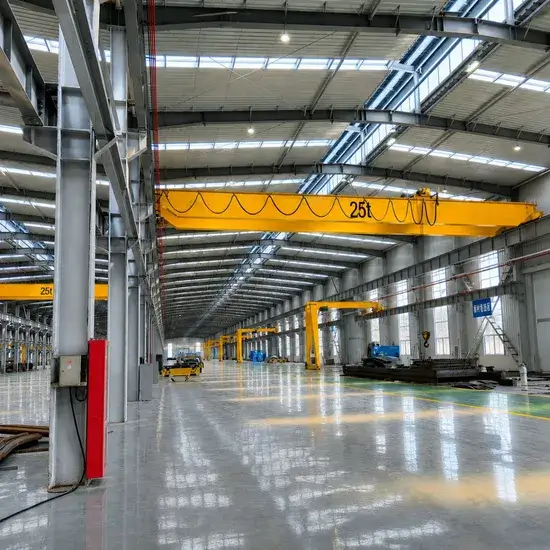
5 Ton vs 10 Ton Crane: Which One Do You Need?
Choosing the right crane capacity is a critical decision that affects your operational efficiency, safety, and bottom line. While both 5-ton and 10-ton cranes are common choices for workshops, warehouses, and construction sites, they serve very different purposes.
In this guide, we’ll break down the key differences – from lifting capacity and price to structural requirements and real-world applications – to help you decide which one is right for your business.
Quick Comparison: 5 Ton vs 10 Ton Crane
| Feature | 5 Ton Crane | 10 Ton Crane |
|---|---|---|
| Max Lifting Capacity | 5,000 kg (11,023 lbs) | 10,000 kg (22,046 lbs) |
| Typical Span | 6–22.5 meters | 7.5–31.5 meters |
| Average Hoist Speed | 5–8 m/min | 3–5 m/min (slower due to heavier load) |
| Recommended Workshop Width | < 18 meters | 18–30 meters |
| Power Supply | 380V / 3-phase, 5–10 kW | 380V / 3-phase, 15–30 kW |
| Runway Beam Requirement | Light to medium I-beam | Heavy I-beam or rail track |
| Estimated Price Range | $5,000 – $15,000 | $12,000 – $35,000+ |

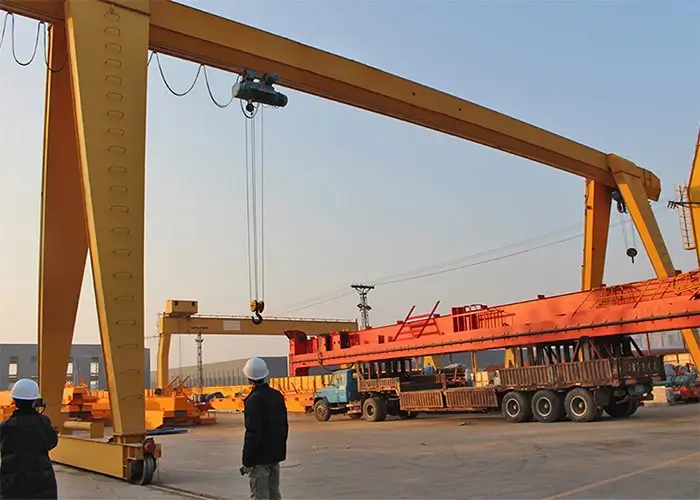
Key Factors to Consider
1. What Are You Lifting?
This is the most obvious but often overlooked question.
-
5-ton crane → Ideal for:
-
Small to medium machine parts
-
Steel bars, pipes, and light structural steel
-
Pallets of goods in a warehouse
-
Maintenance of small generators or engines
-
-
10-ton crane → Necessary for:
-
Heavy industrial equipment (presses, large motors)
-
Precast concrete elements
-
Large steel coils or thick plates
-
Container loading/unloading (empty or light containers)
-
Rule of thumb: Never buy a crane that operates at more than 80% of its rated capacity regularly. If your average load is 4.5 tons, a 5-ton crane is too tight – go for 10 tons.
2. Facility Structure and Space
A 10-ton crane is not simply a “bigger” 5-ton crane. It requires a fundamentally stronger building.
-
For a 5-ton crane:
Standard concrete columns with light steel runway beams. Ceiling height can be as low as 4–5 meters. Fits most existing small workshops without major reinforcement. -
For a 10-ton crane:
Requires reinforced columns, heavy-duty crane rails, and a higher ceiling (6+ meters minimum). The building itself must be designed or retrofitted for heavy overhead loads. Many small workshops cannot physically support a 10-ton crane.
Check before buying: Have a structural engineer evaluate your building’s load-bearing capacity.
3. Duty Cycle and Frequency
Are you lifting once per hour or 20 times per hour?
| Duty Class (FEM/ISO) | 5 Ton | 10 Ton | Typical Use |
|---|---|---|---|
| A1 – A2 (Light) | ✓ | ✗ | Maintenance, toolroom |
| A3 – A4 (Medium) | ✓ | ✓ | Workshop, warehouse |
| A5 – A6 (Heavy) | ✗ | ✓ | Steel yard, heavy manufacturing |
A 5-ton crane used heavily (e.g., 20 lifts/hour, 8 hours/day) will wear out quickly. For high-frequency operation, a 10-ton crane with a higher duty class will actually last longer – even if your loads are only 3–4 tons.
4. Initial Cost vs. Long-Term Value
| Cost Component | 5 Ton | 10 Ton |
|---|---|---|
| Crane equipment | $5k – $15k | $12k – $35k |
| Installation | $2k – $5k | $8k – $15k |
| Runway beams & rails | $3k – $8k | $15k – $30k |
| Electrical upgrade | $0 – $1k | $3k – $10k |
| Total estimated | $10k – $29k | $38k – $90k |
A 10-ton crane typically costs 2.5 to 3 times more than a 5-ton crane when you include structural work. However, if you outgrow a 5-ton crane in 2 years, upgrading will cost even more.
5. Operational Costs
-
Energy: A 10-ton crane uses 2–3x more electricity.
-
Maintenance: Larger hoists, brakes, and motors mean more expensive spare parts.
-
Inspection: Many regions require more frequent third-party inspections for cranes over 10 tons (check local regulations – some classify 10-ton as the threshold for extra safety requirements).
Real-World Application Scenarios
Scenario A: Small Fabrication Shop
Typical lifts: Steel beams up to 2 tons, tooling changes, occasional 4-ton machine move.
Recommendation: 5-ton crane – More than enough capacity, lower upfront cost, fits standard building.
Scenario B: Precast Concrete Yard
Typical lifts: Concrete panels weighing 6–8 tons, 15–20 lifts per day.
Recommendation: 10-ton crane – The 5-ton simply cannot handle the weight. Go for 10-ton with A5 duty class.
Scenario C: Warehouse with Palletized Goods
Typical lifts: Pallets of 1–1.5 tons, 50 lifts/hour.
Recommendation: 5-ton crane – But choose a heavy-duty hoist (higher FEM class) because frequency is high, not the weight.
Scenario D: Future-Proofing
You currently lift 3 tons but expect to lift 6 tons within 3 years.
Recommendation: 10-ton crane – Buying a 5-ton now and replacing it later will cost more in downtime and reinstallation.
Common Mistakes to Avoid
-
Buying a 10-ton “just in case” – The extra structural cost often kills the ROI.
-
Overloading a 5-ton crane – Even 10% overload regularly will cause premature failure and safety risks.
-
Forgetting the hook height – A 10-ton hoist is physically larger. It may reduce your effective lifting height.
-
Ignoring the trolley and runway – A 10-ton crane needs heavier rails, buffers, and stops. Don’t just upgrade the hoist.
Final Verdict
| Your Situation | Best Choice |
|---|---|
| Max load < 4 tons, small workshop, limited budget | 5 Ton Crane |
| Max load between 4–5 tons (tight margin) | 10 Ton Crane (safety margin) |
| Max load > 5 tons | 10 Ton Crane (mandatory) |
| High-frequency lifting (>20 cycles/hour) | 10 Ton Crane (for durability) |
| You plan to grow into heavier loads within 3 years | 10 Ton Crane |
One Last Piece of Advice
Don’t forget the “hidden” costs. Many buyers compare only the crane price, but a 10-ton crane often requires:
-
Stronger overhead runway beams ($5k–$15k extra)
-
A larger electrical service
-
Wider aisles (the crane itself is wider)
-
Heavier floor slabs if it’s a gantry style
If you have any questions, please contact us; we will assess your typical load requirements based on your facility dimensions and provide a comprehensive quotation, including a structural modification proposal.
A 5-ton crane is affordable and practical for light-to-medium work. A 10-ton crane is an investment in heavy-duty capability. Choose the one that fits your actual loads today – but leaves room for tomorrow’s growth.