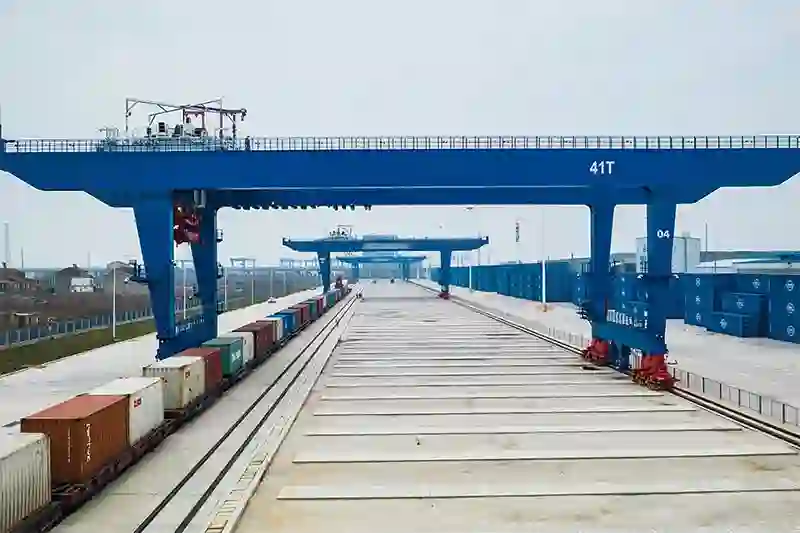
What Is a Gantry Crane? Complete Beginner Guide
What Is a Gantry Crane? Complete Beginner Guide
Gantry cranes are one of the most versatile lifting solutions used across industries worldwide. Whether in ports, warehouses, or construction sites, they provide efficient and flexible material handling—especially where overhead crane systems are not feasible.
What Is a Gantry Crane?
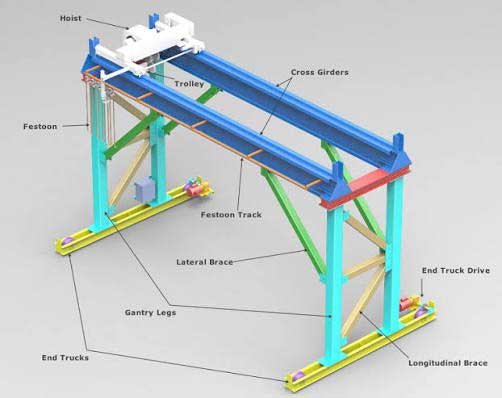
A gantry crane is a type of crane built with a bridge supported by two or more legs that move on wheels or rails. Unlike overhead cranes, gantry cranes do not require building support structures, making them ideal for both indoor and outdoor use.
Key Components:
-
Bridge (Girder): Horizontal beam carrying the load
-
Legs: Support the bridge and connect to the ground
-
Hoist & Trolley: Lift and move loads
-
Wheels/Rails: Enable movement along the ground
Types of Gantry Cranes (China & Global Market)
1. Full Gantry Crane
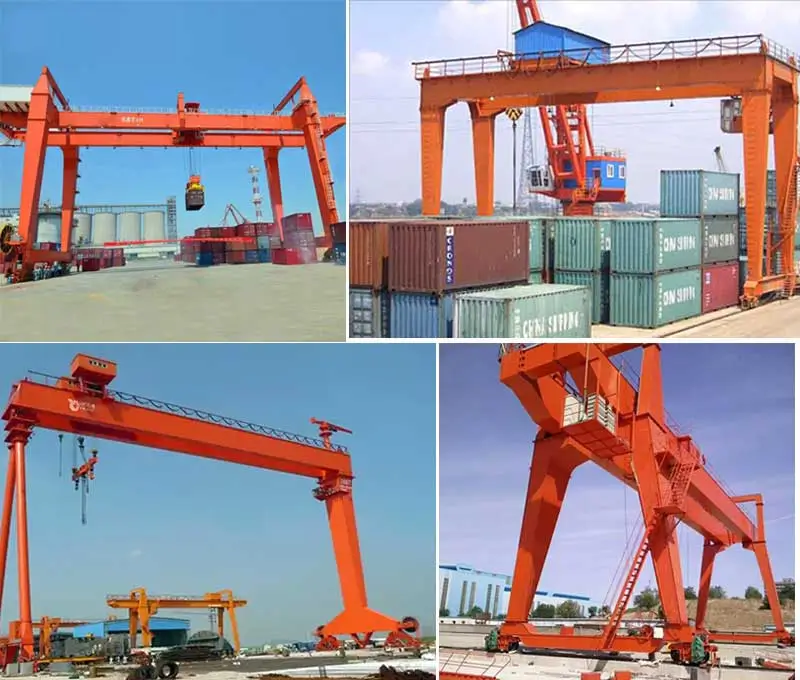
Overview:
A full gantry crane has two legs running on rails, forming a complete frame.
Features:
-
High load capacity (10–500+ tons)
-
Suitable for large outdoor operations
-
Strong stability
Applications:
Shipyards, rail yards, steel storage yards
China vs Overseas:
-
China: Cost-effective heavy-duty production, large export volume
-
Overseas: Focus on automation and environmental adaptability
2. Semi-Gantry Crane
Overview:
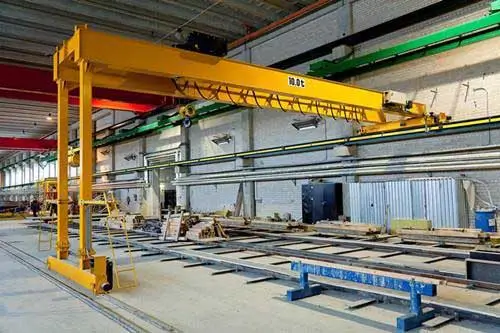
One leg runs on a rail while the other side is supported by a building structure.
Features:
-
Saves space
-
Lower installation cost than full gantry
-
Flexible integration
Applications:
Factories, warehouses with existing structures
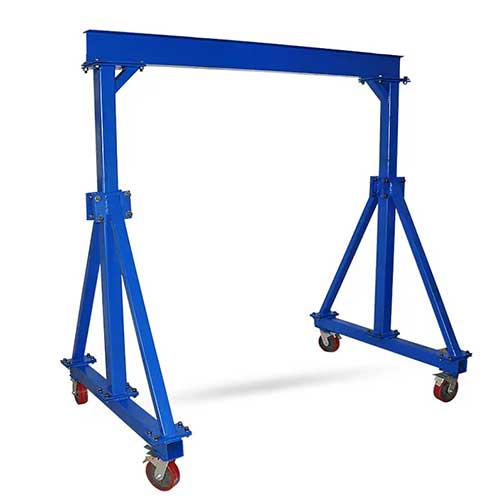
3. Portable Gantry Crane
Overview:
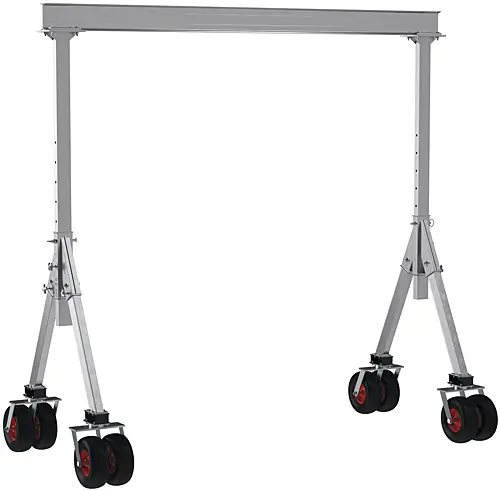
Lightweight and movable, often with rubber wheels.
Features:
-
Easy to assemble and disassemble
-
Adjustable height and span
-
Load capacity: typically 0.5–10 tons
Applications:
Workshops, maintenance, small warehouses
Global Trend:
High demand in DIY, repair shops, and SMEs, especially in North America and Europe.
4. Rubber Tyred Gantry Crane (RTG)
Overview:
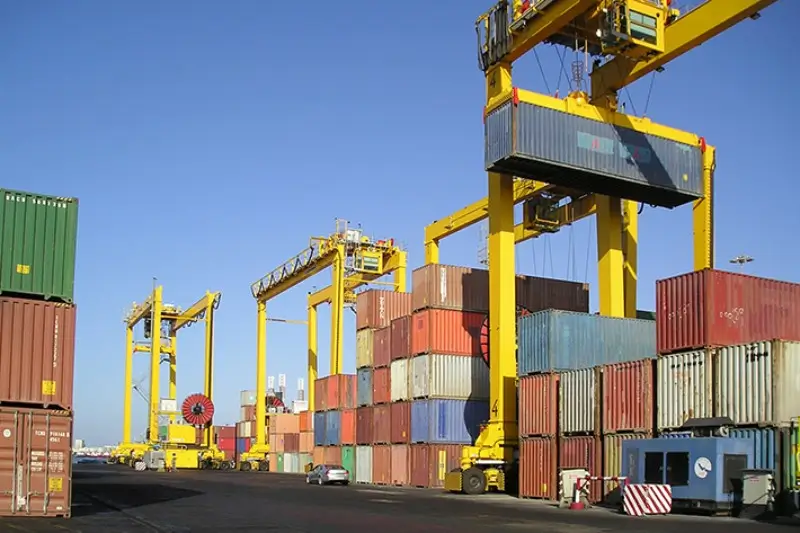
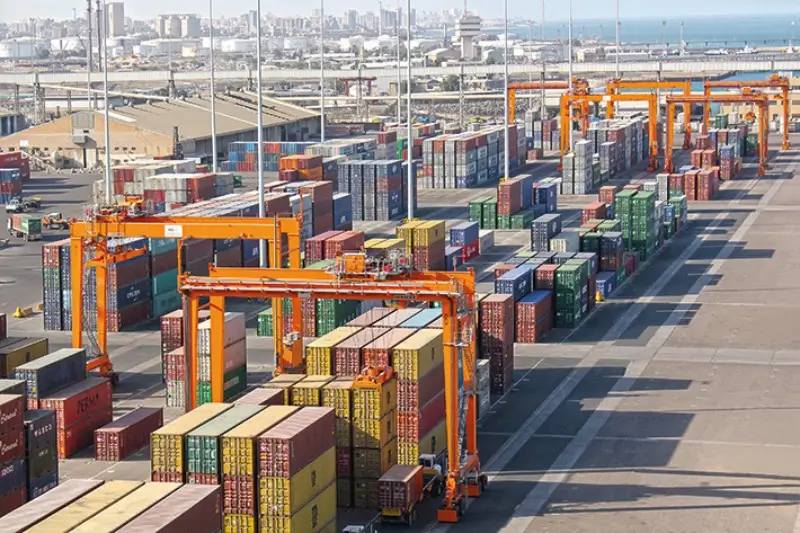
A mobile gantry crane with rubber tires, widely used in ports.
Features:
-
No rail required
-
High mobility
-
Diesel-electric or hybrid power
Applications:
Container terminals, logistics hubs
China vs Overseas:
-
China: Strong manufacturing and rapid delivery
-
Overseas: Focus on green energy (electric RTGs)
5. Rail Mounted Gantry Crane (RMG)
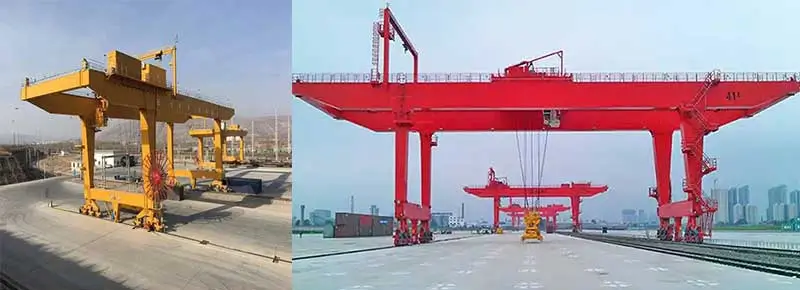
Overview:
Runs on fixed rails, typically used in container yards.
Features:
-
High precision
-
Suitable for automation
-
Large span and capacity
Applications:
Ports, intermodal terminals, automated warehouses
Common Uses of Gantry Cranes

Gantry cranes are widely used in:
-
Ports & Shipping: Container handling
-
Construction: Lifting precast concrete and steel structures
-
Warehousing: Loading and unloading goods
-
Manufacturing: Moving heavy equipment
-
Rail Yards: Cargo handling
Benefits of Using Gantry Cranes
1. No Building Support Required
-
Works independently without overhead runway beams
2. Flexible & Mobile
-
Can be moved or relocated easily (especially RTG & portable types)
3. Cost-Effective Installation
-
Lower infrastructure cost compared to overhead cranes
4. Wide Application Range
-
Suitable for indoor and outdoor environments
5. Scalable & Customizable
-
Adjustable for different capacities, spans, and heights
Gantry Crane vs Overhead Crane (Quick Comparison)
| Feature | Gantry Crane | Overhead Crane |
|---|---|---|
| Structure | Legs on ground | Mounted on building |
| Mobility | High (especially RTG) | Limited to fixed rails |
| Installation | Easier | Requires structural support |
| Best For | Outdoor & flexible use | Indoor heavy-duty lifting |
Final Thoughts
Gantry cranes are a powerful and flexible solution for modern material handling. From portable workshop cranes to automated container yard systems, they serve a wide range of industries globally.
For international buyers, the current trend is clear:
-
China offers competitive pricing and manufacturing scale
-
Overseas markets emphasize automation, safety, and sustainability
Choosing the right gantry crane depends on your lifting capacity, mobility needs, and working environment.