European Overhead Crane vs Standard Crane: Key Differences, Pros & Best Applications
When choosing an overhead crane system, many buyers face a common question: European Overhead Crane or Standard Overhead Crane — which is better?
The answer depends on lifting capacity, operating frequency, plant layout, and long-term cost considerations.
This guide provides a clear, practical comparison to help you make the right decision.
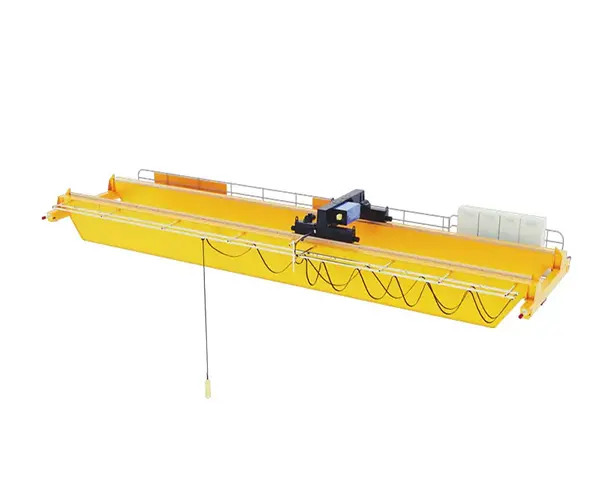
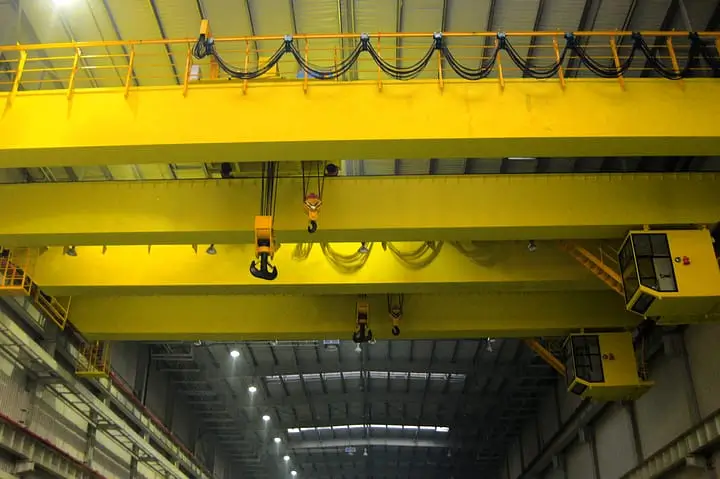
1. Design Philosophy
European Overhead Crane
European overhead cranes follow modular and lightweight design principles, emphasizing efficiency, compact structure, and energy savings.
Key characteristics:
-
Box-type girder with optimized FEM design
-
Compact trolley and reduced hook approach
-
Frequency-controlled motors as standard
-
Compliance with FEM, DIN, and EN standards
Standard Overhead Crane
Standard cranes focus on structural strength and adaptability, widely used in developing markets and traditional factories.
Key characteristics:
-
Heavier girder structure
-
Larger hook clearance
-
Conventional motors and reducers
-
Designed mainly according to GB or customized local standards
2. Performance Comparison
| Item | European Overhead Crane | Standard Overhead Crane |
|---|---|---|
| Dead Weight | Lighter (15–30% less) | Heavier |
| Lifting Precision | High (VFD standard) | Medium |
| Energy Consumption | Low | Higher |
| Noise Level | ≤ 70 dB | 75–85 dB |
| Operating Speed | Smooth & adjustable | Fixed speed |
| Installation Space | Compact | Requires more clearance |
3. Manufacturing & Component Quality
European Overhead Crane
-
Motors, gearboxes, and electrics often sourced from SEW-Eurodrive, Siemens, or equivalent
-
CNC-machined wheels and precision rails
-
Fully standardized parts for easy replacement
Standard Overhead Crane
-
Components vary by supplier
-
More manual welding and fabrication
-
Spare parts widely available and low-cost
4. Cost Comparison (Short-term vs Long-term)
| Cost Factor | European Crane | Standard Crane |
|---|---|---|
| Initial Purchase | Higher | Lower |
| Installation | Faster | Slower |
| Power Consumption | Lower | Higher |
| Maintenance Cost | Low | Medium |
| Service Life | 20–25 years | 12–18 years |
Key insight:
European overhead cranes cost more upfront, but save money over long-term high-frequency operation.
5. Best Application Scenarios
European Overhead Crane is Best For:
-
Automotive & precision manufacturing
-
High-frequency lifting (≥ A5 duty)
-
Modern factories with limited headroom
-
Projects requiring CE certification
-
UAE, EU, Australia, and high-end Asian markets
Standard Overhead Crane is Best For:
-
General manufacturing
-
Warehouses & steel workshops
-
Low-to-medium lifting frequency
-
Budget-sensitive projects
-
Africa, South Asia, Latin America
6. Which One Should You Choose?
Choose European Overhead Crane if:
-
You value efficiency, automation, and low operating cost
-
Your crane runs multiple shifts daily
-
Plant space is limited
Choose Standard Overhead Crane if:
-
Budget is the primary concern
-
Lifting tasks are occasional
-
Maintenance simplicity is more important than precision
7. Final Recommendation for Buyers
There is no “better” crane — only a better fit for your application.
For export projects, especially in UAE, Saudi Arabia, Europe, and high-end factories, European overhead cranes are increasingly becoming the standard choice.
For warehouses, steel yards, and developing markets, standard overhead cranes remain reliable and cost-effective.