
Scrapping Criteria for Crane Reels
As the core load-bearing component, the safety of crane drums directly impacts equipment lifespan and operational safety. Drum retirement requires a comprehensive assessment across the following six dimensions to establish a systematic basis for judgment.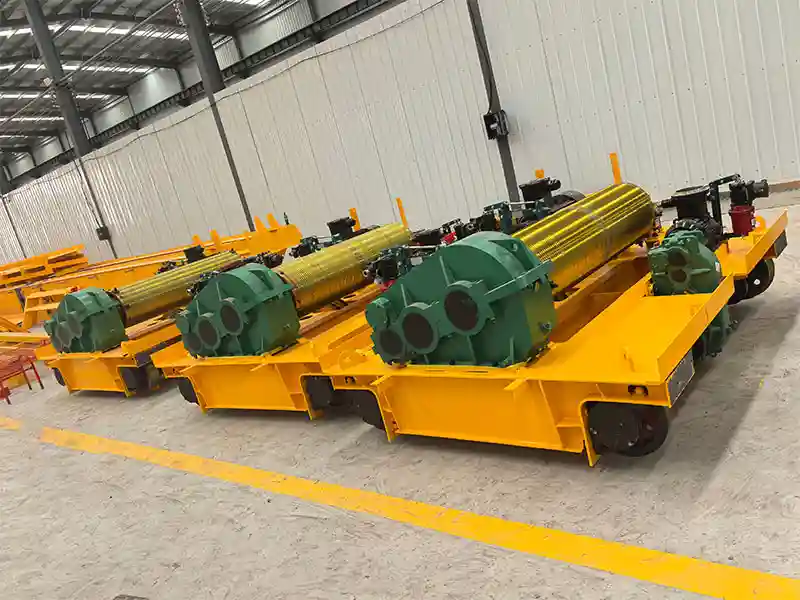
I. Zero-Tolerance Policy for Cracks and Surface Defects
- Crack Detection: Any visible cracks, welding defects, or material delamination constitute immediate scrapping criteria. Cast drums exhibiting performance-impairing surface cracks (e.g., side plate damage, drum body fractures) shall be scrapped immediately. Cracks in welded drums require confirmation via non-destructive testing (e.g., magnetic particle testing MT, ultrasonic testing UT); if irreparable, mandatory scrapping applies.
- Corrosion and Material Deterioration: Failure is determined when localized corrosion depth exceeds 10% of original wall thickness or when extensive rusting poses perforation risk.
II. Quantitative Standards for Wear Limits
- Drum Wall Wear: General standards mandate scrapping when wall wear reaches 20% of original thickness. However, specialized equipment like tower cranes follows stricter criteria—scrapping is required at 10% wear (JB/T 11156-2020).
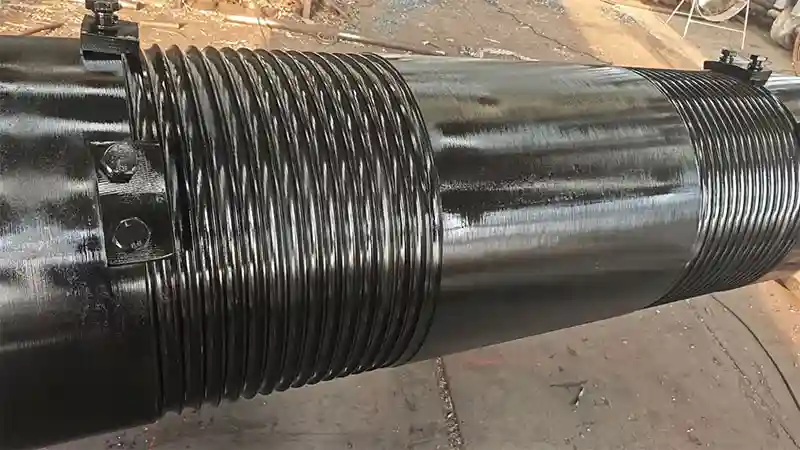
- Rope groove damage: Scrapping is triggered when the reduction in groove bottom diameter exceeds 50% of the wire rope diameter, or when uneven groove wall wear reaches ≥3mm, or when groove bottom wear exceeds 25% of the wire rope diameter.
- Brake Disc/Side Plate Deformation: Structural integrity is compromised when drum brake disc surface wear exceeds 2mm, side plates exhibit plastic deformation, or bolt hole wear exceeds 10% of original dimensions.
III. Critical Values for Structural Deformation and Dimensional Deviation
- Shaft Component Failure: Replace entire shafts (drum shafts, pulley shafts) when severe wear (e.g., shaft diameter reduction ≥5%), bending deformation, or risk of shear fracture occurs.
- Geometric Dimension Deviation: Structural deviations such as drum edge height below 2x wire rope diameter or groove spacing deviation >1.5mm compromise wire rope winding stability.
IV. Non-Destructive Testing and Life Assessment Techniques
- Inspection Methods: PT (penetrant testing) for surface cracks, UT/MT for internal defects, RT (radiographic testing) for weld quality assessment; ultrasonic thickness gauges for periodic wall thinning monitoring.
- Life Prediction: Combining cumulative load spectrum, stress cycle count, and material fatigue limit (e.g., fatigue life curve for Q690 high-strength steel), finite element analysis (FEA) simulates stress distribution to predict remaining service life.
V. Environmental and Operating Condition Correction Factors
- Corrosive Environments: Highly corrosive settings like coastal areas or chemical zones accelerate material degradation, requiring shorter inspection cycles and lower wear thresholds.
- High-Frequency Usage Scenarios: In 24/7 continuous operation environments (e.g., ports, steel mills), mandatory inspections are recommended every 5,000 operating hours with wear standards controlled at 15% of original values.
VI. Compliance Scrapping Procedures and Replacement Options
- Scrapping Procedure: After professional inspection confirmation, file with special equipment regulatory authorities. Dismantling must be performed by certified recycling enterprises. Unauthorized modification or reuse is strictly prohibited.
- Replacement Strategy: Prioritize modular design reels for rapid replacement. Promote intelligent monitoring systems (e.g., vibration sensors, strain gauges) to enable real-time wear and crack alerts.